Key Takeaways
- The Pantanal is two trips. The north, around Porto Jofre, is jaguars from a boat on the rivers; the south, at ranches like Caiman, is jaguars from a vehicle plus the rest of the wetland.
- Go in the dry season, roughly July to October, when the cats hunt along exposed riverbanks.
- Caiman's Onçafari project has habituated jaguars to vehicles; in 2019, 98 per cent of guests saw one, though no sighting is ever guaranteed.
- For a group, book Caiman's private Cordilheira villa; for a couple, a master suite at Casa Caiman; for the most jaguar time, add three nights on the water in the north.
On December 17, 1913, Theodore Roosevelt boarded a shallow river steamer at Corumbá, on the Paraguay River, and headed for a cattle ranch called Las Palmeiras on the Rio Taquari. He was fifty-five, almost five years out of the White House, and on his way to the expedition that would nearly kill him, the descent of the River of Doubt. But first he wanted a jaguar.
The country he steamed into was a vast marsh broken by islands of trees, and he described it the way people still do. Flocks of jabiru storks, he wrote, whitened the marshes and lined the riverbanks, with rosy spoonbills among them. Caimans swarmed on every sandbank. Before the first evening was out the party had met a giant anteater in the open grass. He even used the local word for the place: the long days riding through the swamp, he wrote, “the pantanal,” were pleasant and interesting.
The hunt itself began at three in the morning. Roosevelt, his son Kermit and Colonel Cândido Rondon rode out on small marsh ponies behind two borrowed jaguar hounds, found fresh tracks at the edge of a patch of jungle, and treed a jaguar in a taruman tree. Roosevelt shot it. The next day Kermit shot a huge male in a fig tree. Roosevelt called the jaguar the king of South American game, and for much of the century that followed, ranchers across the Pantanal shot jaguars as cattle killers.
That is the part of the story that has changed. The same marsh is now the most reliable place on earth to see a wild jaguar, and some of the ranches that once hunted them have built their business on keeping them alive. Here is how I would plan it, and where I would put you.
Northern or southern Pantanal: which should you choose?
The Pantanal is the world’s largest tropical wetland, spread across Brazil, Bolivia and Paraguay, and for a traveler it is really two trips.
The north is about jaguars and nothing else. You fly into Cuiabá, drive south down the Transpantaneira, the long dirt road through the wetland, to Porto Jofre at its end, and spend your days on the Cuiabá River and its side channels in a small boat, scanning the banks. The northern Pantanal is often described as having the highest density of jaguars in the world, and in the dry season the cats hunt along the exposed riverbanks in plain view.
The south is a safari. You fly into Campo Grande and stay on a working ranch, out in open vehicles at dawn and dusk, with jaguars as the headline but giant anteaters, tapirs, hyacinth macaws, capybaras and hundreds of bird species around them. It is the Pantanal Roosevelt actually rode through: ranch country, cattle, horses and marsh.
If jaguars are the whole point and you have three or four days, go north. If you want the wetland, a beautiful lodge and a very good chance of a jaguar, go south. If you have a week, do both, south first, so the jaguar days on the river come last.
When should you go?
In the dry season, roughly July to October. As the water drops, wildlife concentrates along the rivers and the remaining lagoons, the vegetation thins, and the cats come down to the banks to hunt. June and November are good shoulder months with fewer boats on the water. From around December to March the rains arrive, much of the wetland floods, and jaguar viewing gets harder, though the landscape is at its greenest.
Book early for the peak months. The best lodges in both halves of the Pantanal are small, and the jaguar season is short.
Caiman: the ranch that stopped shooting jaguars
Caiman, near Miranda in Mato Grosso do Sul, is a 53,000-hectare cattle ranch that has belonged to the Klabin family since 1952 and has welcomed travelers since the 1980s. It is the most complete lodge in the southern Pantanal, and the reason to go is a project that began in 2011.
That year Mario Haberfeld, a former racing driver, set up Onçafari at Caiman with the ranch’s owner, Roberto Klabin. The model came from the leopard reserves of South Africa’s Sabi Sand: habituate the cats to safari vehicles, never to people, so that they carry on hunting, resting and raising cubs while a car sits quietly nearby. It worked. In 2013, 16 per cent of Caiman’s guests saw a jaguar. By 2019 it was 98 per cent, and more than 200 individual jaguars have been recorded on the property. The project never guarantees a sighting, and you should not expect one on demand, but few places on earth come closer. Guests can join the Onçafari researchers in the field by booking ahead and making a donation to the project.
There are two ways to stay.
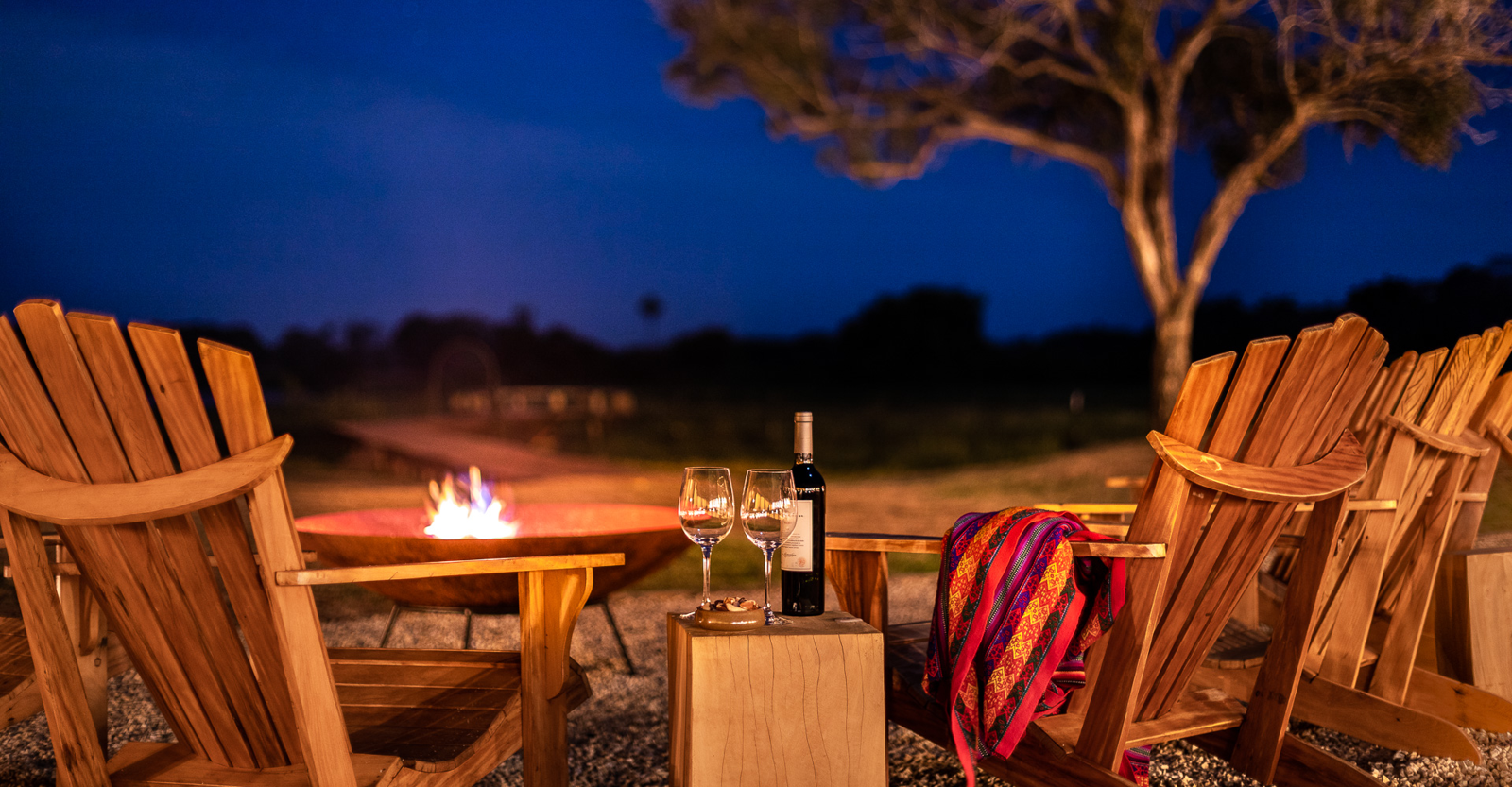
Casa Caiman is the main lodge: 18 suites in the restored buildings of a century-old ranch house, set on a bay, with a pool, a sauna, a small gym, a fireplace and a firepit outside for after the evening drive. The standard suites are 45 square metres with a king bed and a terrace; the superior suites, 52 square metres, add a coffee machine and a minibar. The ones to ask for are the master suites, 80 square metres with a separate living room and a porch over the bay. Children are welcome from eight. Book Casa Caiman for a couple or a small family who want the full Caiman programme with other travelers around them at dinner.
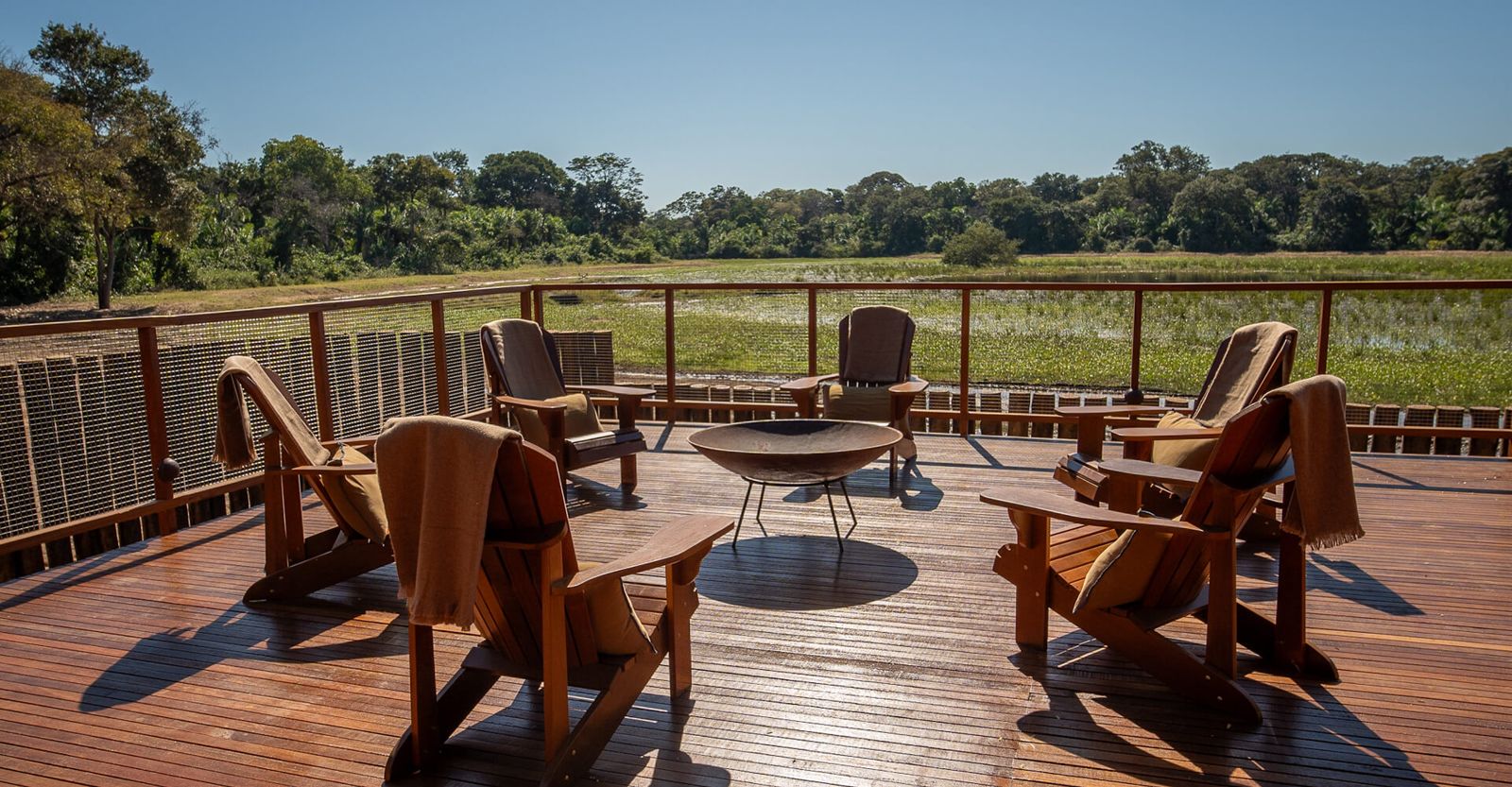
Cordilheira is the version I would choose for a family or a group of friends. It is a private villa, booked by one group at a time, with seven 70-square-metre bungalows raised above the forest, each with a balcony and a hammock, around an infinity pool, a gym, a bar and a firepit. It sleeps up to 16. It comes with its own vehicle and field guide, so the schedule moves around you rather than the lodge, and it is the only accommodation at Caiman whose rate includes drinks. Because the guide is yours, children of any age can come.
At both, the rate is full board and includes the core activities: open-vehicle safaris at dawn and dusk, night spotlighting, Canadian canoes on the lagoons and walks through the forest. Most of the guides are biologists. More than 350 bird species have been recorded on the ranch, and the Hyacinth Macaw Institute, which has studied the birds here for more than 30 years, will show you their nests if you book ahead.
Getting there takes some planning. Caiman is 236 kilometres from Campo Grande’s airport, about three and a half hours by road, and the ranch does not run the transfer itself. The better option, if the budget allows, is a one-hour private flight to Caiman’s own grass airstrip.
Porto Jofre: jaguars from the water

The northern Pantanal works differently. There is no ranch to explore and no game drive. You live on the river and go out in small boats three times a day, with the boatmen on the radio to each other so that a cat seen by one boat is soon watched by several.
The most comfortable way to do it is SouthWild Jaguar Suites: six floating suites moored off the bank of the Piquiri River, each about 30 square metres with floor-to-ceiling windows, a private deck and its own bathroom, alongside the SouthWild Jaguar Flotel. All meals are included, and the days are built around three boat outings and guided walks. It is not a luxury lodge in the Caiman sense, and it does not pretend to be one. Book it for three nights at the end of a southern stay, purely for the time on the water.
A week in the Pantanal: how I would split it
Days 1 to 4: Caiman. Fly to Campo Grande and on to the ranch. Four nights at Casa Caiman or Cordilheira gives you eight safari outings, a night drive, a morning on the lagoons by canoe and, with planning, a session with the Onçafari team.
Days 5 to 7: the north. Fly to Cuiabá, drive the Transpantaneira to Porto Jofre, and spend three nights on the river at SouthWild for the concentrated jaguar time.
Day 8: home via Cuiabá.
If you only have five nights, choose one half rather than rushing both.
What Roosevelt would still recognize
The marsh would be familiar to him. The jabirus still stand in the shallows, the caimans still crowd the sandbanks, and the jaguars still come down to the water in the dry season, the way they did when his party rode out at three in the morning. What would surprise him is the arithmetic. A jaguar that once ended up as a trophy is now worth far more alive, to the ranch, to its guides and to the conservation work that tourism pays for. Some of the men who once hunted jaguars here now guide visitors to them. The best way to see the Pantanal now is to go and look, and to leave the cats where they are.
What You Actually Want to Know
When is the best time to see jaguars in the Pantanal?
The dry season, roughly July to October. Water levels drop, the cats come down to the riverbanks to hunt, and the vegetation thins. June and November are good shoulder months with fewer boats.
Northern or southern Pantanal?
The north for the highest density of jaguars, watched by boat from Porto Jofre. The south for a lodge-based safari at a working ranch, where jaguars are one part of a much wider wildlife trip.
How do you get to Caiman?
Fly into Campo Grande, then drive about three and a half hours (236 kilometres), or take a one-hour private flight to the ranch's grass airstrip. Caiman does not run the road transfer itself; your advisor arranges it.
Can children go?
Casa Caiman takes children from eight. The private Cordilheira villa, which comes with its own vehicle and guide, can take children of any age.
Is a jaguar sighting guaranteed?
No. Onçafari is careful never to promise one. But sighting rates at Caiman have risen from 16 per cent of guests in 2013 to close to all of them a decade later.
Tell a Noon Wild advisor which story pulled you in, and we will build the trip around it. Start the conversation.
Further reading
Sources (12)
- Theodore Roosevelt, Through the Brazilian Wilderness (1914), Project Gutenberg
- American Heritage: TR's Last Adventure
- Caiman: Fact sheet 2025
- Caiman: Casa Caiman
- Caiman: Private Villa Cordilheira
- Forbes Brasil (ForbesLife): Caiman feature, November 2021
- Mongabay: An unlikely safari in Brazil is helping save the Pantanal's jaguars
- Natural Habitat Adventures: Tracking jaguars with the Onçafari Project
- Wanderlust: Inside the Caiman Ecological Refuge, Brazil
- Responsible Travel: Jaguar safaris in the Pantanal
- Wild Voyager: Porto Jofre
- Natural World Safaris: SouthWild Jaguar Suites